Home Financing Calculator – Calculate Your Installment and Financing
Property & Loan
Loan Terms
Additional Costs & Options
Buying a home is one of the biggest financial decisions in life. Solid planning is essential here.
The Home Financing Calculator lets you estimate in advance how a loan will affect your monthly installment and interest costs. Mortgage rates have risen noticeably since 2024, from around 2% to now between 3.2% and 4.1%, making an accurate calculation all the more important.
The home purchase loan calculator also shows how interest and repayment portions are distributed over the loan term. You’ll find more calculators covering financing on Profinanzrechner.
What Is a Home Financing Calculator?
The Home Financing Calculator is a digital tool that gives you an accurate estimate of what financing a property costs in a high-interest-rate country like Germany. It factors in the loan amount, repayment portions, property price, and loan term.
It differs from an ordinary calculator that only gives a rough estimate of your mortgage. The home purchase loan calculator gives you a clear overview of your financial options by breaking your monthly installments down into interest and repayment portions.
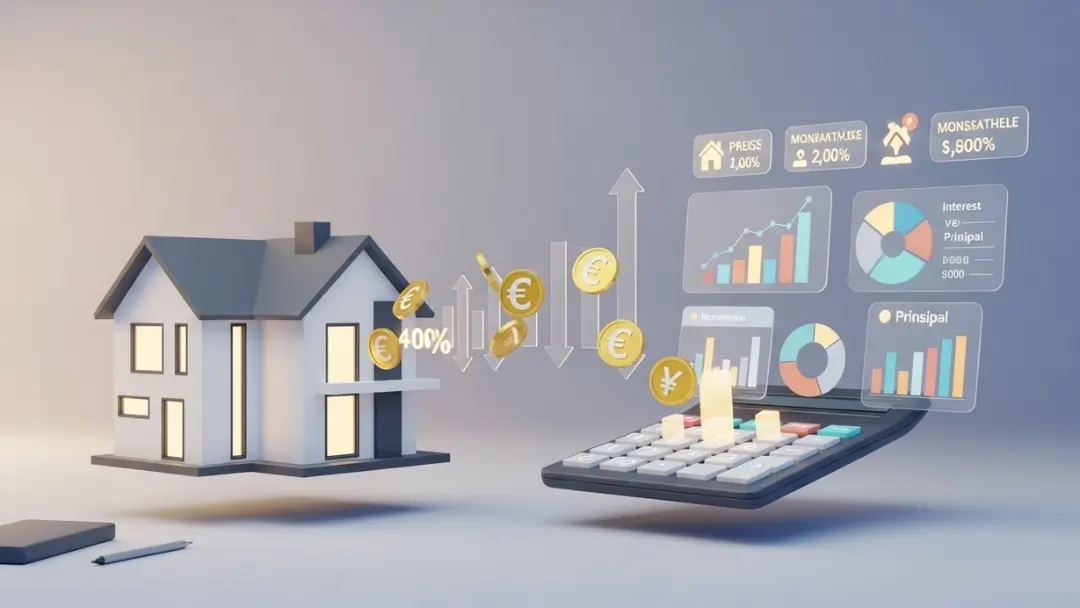
There are other tools available under various names, such as home financing loan calculator, home purchase loan calculator, and property loan calculator, and these terms can be used interchangeably. The main purpose of this home financing calculator is the same as that of a real estate financing calculator: to help borrowers make more informed decisions when buying a property.
Key Factors That Influence Home Financing in Germany
Several factors play a decisive role when calculating home financing with the Home Financing Calculator, determining both your monthly costs and your total repayment obligations.
Property Price and Loan Amount
The starting point is the property’s purchase price. In Germany, average property prices in major cities like Munich, Frankfurt, and Hamburg exceed €6,000 per square meter, while in smaller cities they average around €3,000 to €4,000 per square meter. Since most buyers can’t cover the entire purchase price at once, financing is required.
The loan amount usually equals the purchase price minus the down payment. A Home Financing Calculator adjusts its calculations according to the size of the down payment.
Interest Rates
Interest rates have a significant impact on the affordability of a loan. In Germany, mortgage rates are influenced by:
Currently, fixed mortgage rates with a 10-year term range between 3.5% and 4%, while variable rates can continue to fluctuate. Even a 0.5% change in interest rates can raise or lower the total cost of a loan by thousands of euros over its full term.
Loan Term (Fixed-Interest Period)
German mortgages typically have fixed-interest periods ranging from 5 to 30 years. A 10-year fixed-interest period is the most common. A longer term provides stability but can come with slightly higher interest rates. Shorter terms often mean lower initial rates, but carry refinancing risk.
The Home Financing Calculator factors in the loan term to project your monthly installments and total interest paid.
Repayment Rate (Tilgung)
The repayment rate determines how quickly the principal is paid off. The minimum repayment rate is usually 1% of the loan amount per year, but many borrowers choose 2–3% to shorten the loan term.
For example, paying off a €300,000 loan takes considerably longer at a 2% repayment rate than at a 3% rate. A Home Financing Calculator with a dedicated repayment option shows how increasing the repayment rate can save on interest and shorten the term of the financing.
Equity
Equity is the amount the buyer contributes upfront toward the property purchase. In Germany, banks typically require at least 20–30% equity, which covers not just part of the purchase price but also the costs associated with buying (roughly 10–12% for notary fees, real estate transfer tax, and land registry).
Some tools, such as a calculator for real estate financing without equity, simulate scenarios where no equity is available. Financing without equity, however, usually leads to higher interest rates and stricter requirements from banks.
Additional Costs (Nebenkosten)
In addition to the purchase price, German property buyers face several extra costs:
These costs can easily raise the purchase price by 10–12%. A property loan calculator with no registration required may only show the loan costs, but buyers still need to factor in these additional expenses.
Fixed vs. Variable Interest Rate Options
Borrowers in Germany can choose between fixed and variable interest rates. Fixed rates offer long-term security, while variable rates fluctuate depending on market conditions. A calculator helps compare both models and determine which is the safer or more affordable option based on your financial situation.
Special Repayments
Many banks allow borrowers to make additional repayments of up to 5–10% of the loan amount per year without penalty interest. A property loan calculator with a special repayment option shows how the occasional lump sum, such as a bonus payment or inheritance, can pay down the total debt faster and save substantial interest costs.
Inflation and Market Conditions
The German property market is influenced by inflation, economic growth, and rental yields. For instance, with inflation averaging 5.9% in 2023, property served as a hedge against currency devaluation. However, rising inflation also led to higher ECB interest rates, making financing more expensive.
Creditworthiness and Bank Policies
Banks in Germany assess creditworthiness based on income stability, credit history (SCHUFA score), and debt-to-income ratio. Poor creditworthiness leads to higher interest rates or rejected financing applications. A home purchase loan calculator helps estimate what monthly installment burden is realistic relative to your income level.
Benefits of Using a Home Purchase Loan Calculator
Home Financing Statistics in Germany
These figures illustrate why a structured financial approach and a reliable Home Financing Calculator are essential for German buyers.
Different Types of Financing Calculators
There are various types of financing calculators tailored to different needs:
Both serve the same purpose, namely helping borrowers make informed decisions, but they differ in scope and flexibility.
Challenges in Property Financing in Germany
These challenges make clear why a calculator is essential before committing to a loan.
Future Outlook for Property Financing in Germany
Experts predict that:
Conclusion
Financing a home in Germany calls for careful planning, especially given rising property prices and fluctuating interest rates. A Home Financing Calculator is an indispensable tool for estimating affordability, monthly installments, and long-term financial impact. By factoring in equity, repayment amounts, interest rates, and additional costs, it brings clarity and control to one of the biggest financial commitments in life.
Whether using a Home Financing Calculator, a property loan calculator, or a calculator for real estate financing without equity, borrowers can approach their property purchase with confidence. Ultimately, the right financial planning ensures that buying property in Germany isn’t just a dream, but a sustainable and secure investment.